Q1: What is the difference between 420-series and 304/310-series stainless steel, and can you provide mirror polishing?
A1: Austenitic grades (304/316) contain 16-22% chromium and 7-14% nickel, remain non-magnetic austenite at room temperature, and have very low carbon content (≤0.08%) for strong corrosion resistance in outdoor/humid environments; they cannot be hardened by quenching and only work-harden. Martensitic grades (420J1/420J2/2Cr13/3Cr13) contain 11-18% chromium with no nickel and higher carbon (0.1-1.2%), form magnetic martensite after quenching, and can reach HRC50-55 hardness - suited to cutlery, valves and wear-resistant small parts, but with lower corrosion resistance (light atmospheric protection only) and greater brittleness after hardening, making them less suitable for deep-drawing or complex forming. Our current martensitic stainless steel grades include 5Cr15MoV, 2Cr13(420J1), 3Cr13(420J2) and 4Cr13. We do not currently have mirror-polishing equipment and can only provide standard fine-polished surface finish.
Q2: I need to purchase cold rolled hardened and tempered carbon steel strip. What information do you need for a quote?
A2: Please share the steel grade, width, thickness, tolerance, hardness and surface finish required - we can then provide price/MOQ information or prepare a sample for you.
Q3: What edge conditions are available?
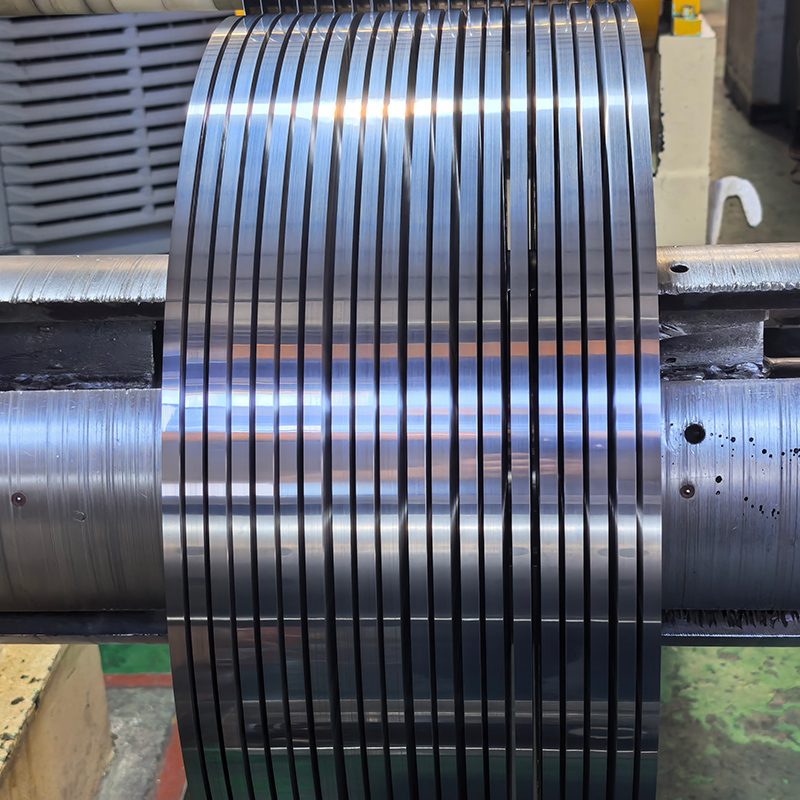
A3: Mill edge, slit edge, square edge with rounded corners, full rounded edge, or per customer requirements.
Q4: How do you ensure batch traceability?
A4: Every coil's outer packaging carries a label specifying steel grade, dimensions, surface color, net weight, production date and a QR-coded batch number, traceable to production date, equipment, operator and in-process records.
Q5: What testing equipment do you use?
A5: Various hardness testers, German SPECTRO optical emission spectrometer, Zeiss microscope, tensile testing machine, salt spray test chamber, among others.
Q6: What certifications does your company hold?
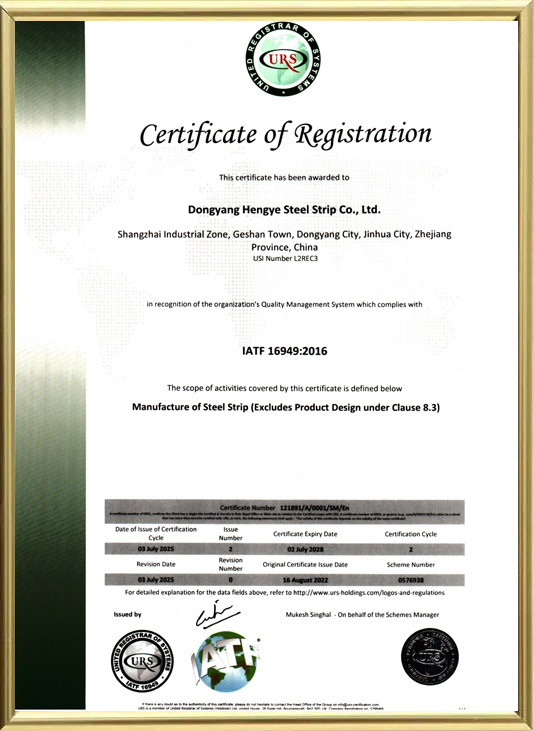
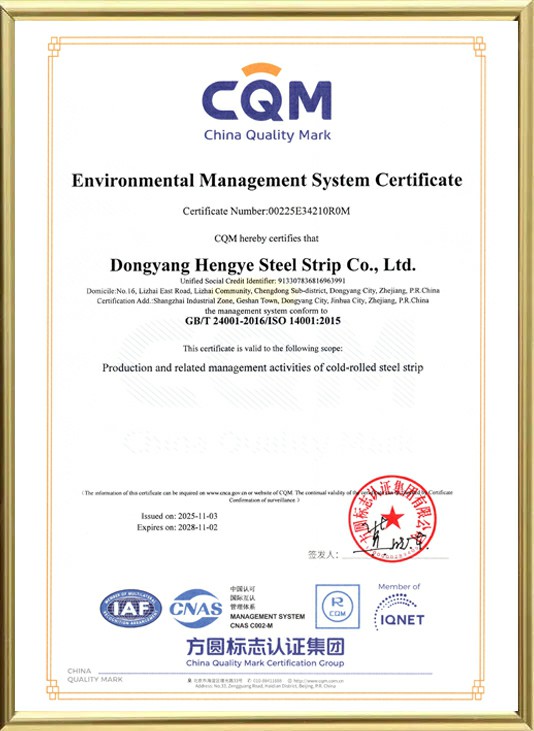
A6: Our quality management system certifications include IATF16949:2016 and ISO14001:2015.



 English
 中文简体
中文简体