


 English
 中文简体
中文简体Choosing the right steel strip is rarely a matter of one feature alone. In many manufacturing settings, the material has to hold shape, respond well to processing, and remain stable in use. That balance is why buyers often compare strength, flexibility, finish, and consistency before placing an order. A strip that works well in one application may feel too rigid, too soft, or too difficult to process in another.
For that reason, purchasing decisions usually begin with a clear view of the end use. A spring component, a cutting part, and a precision element may all start from similar raw material ideas, yet the final requirements can differ in ways that matter. The heat treatment route, the surface condition, the thickness range, and the way the strip will be handled after delivery all shape the outcome. When those points are examined in order, the selection process becomes more practical and less uncertain.
Hardened and Tempered Steel Strip is often chosen when a project needs a controlled balance between hardness and workable toughness. Even then, the right choice depends on what the strip must do after it leaves the mill and enters the next production step. That is why a structured view of material behavior, application demand, processing limits, and buying criteria can save time and reduce mismatch.
What Is Hardened and Tempered Steel Strip and How Is It Made for Industrial Applications
The basic idea is simple: the strip is processed so it can handle demanding use while still keeping a useful level of workability. Heat treatment changes the internal structure of the steel, which gives it a different response compared with untreated strip. In practice, that means the material can be selected for jobs that call for shape retention, resistance to wear, and stable performance under repeated use.
The manufacturing path usually follows a controlled sequence. The strip is prepared, heated, adjusted through cooling, and then tempered so the final condition is not overly brittle. The goal is not to push one property to an extreme, but to bring several properties into balance. That balance is what makes the material practical across many industrial uses.
Buyers often ask whether a strip made for one use can serve another. The answer depends on how closely the process matches the final duty. A strip intended for bending, for example, may need a different condition than one used in a part that stays mostly fixed. That is one reason manufacturers describe the material in terms of application rather than as a general-purpose item.
In purchase discussions, it helps to ask about how the material is produced, what condition it arrives in, and how it is intended to be processed next. Those points are often more useful than a loose comparison based only on appearance.
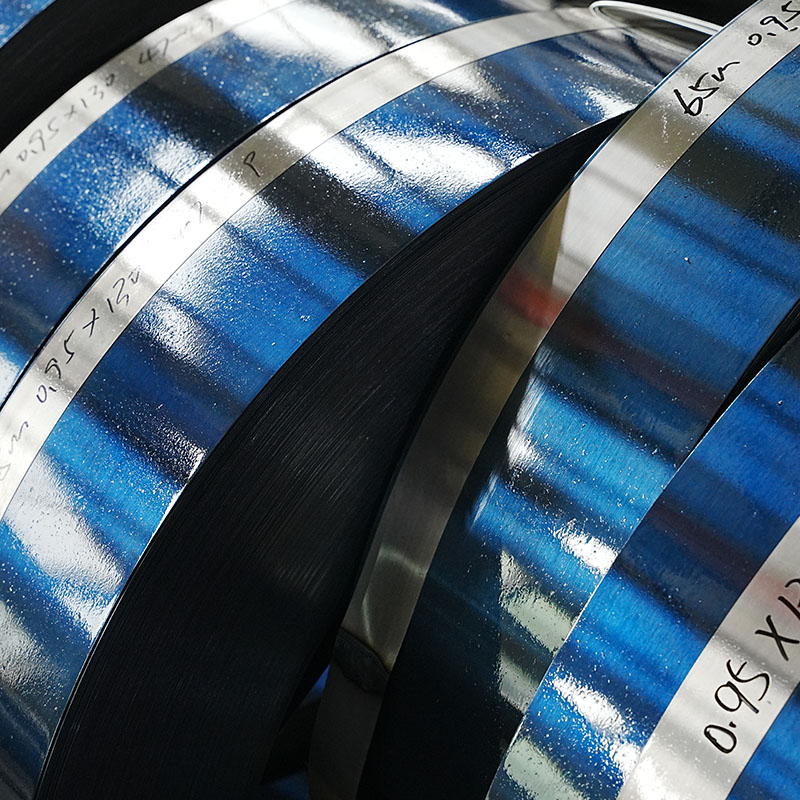
What Factors Affect the Hardness Flexibility and Durability of Hardened and Tempered Steel Strip
Several factors shape how the strip behaves after production. The heat treatment route is an important factor because it influences the final balance between hardness and toughness. A strip that is very hard may resist wear well, but it may also respond differently during forming or bending. A strip with more flexibility may be easier to process, but it must still hold the required shape in use.
Thickness also matters. A thinner strip can react differently during cutting and shaping than a thicker one. The same is true for width, edge condition, and surface state. Small changes in those areas can affect how smoothly the material runs through equipment and how it performs after assembly.
There is also the issue of consistency from one coil or batch to another. In manufacturing, buyers often care less about a single sample and more about repeatable behavior. If the strip changes too much from one lot to the next, process settings may need constant adjustment. That can create waste and lower confidence in the supply chain.
| Selection Concern | What It Influences | What Buyers Usually Check |
|---|---|---|
| Hardness Level | Wear resistance and shape retention | Whether the strip suits the final duty |
| Flexibility | Ease of forming and bending | How the strip behaves in processing |
| Surface Condition | Handling and appearance | Smoothness, marks, and surface state |
| Thickness Consistency | Fit in downstream use | Uniform behavior across the supply |
| Edge Quality | Safety and processing stability | Whether the edges are clean and even |
A careful buyer often looks at these points together rather than one by one. That approach gives a clearer view of how the strip will behave in the full production chain.
Why Is Hardened and Tempered Steel Strip Used for Springs Cutting Tools and Precision Components
The material is often selected for parts that need a stable response under repeated stress. Springs need a controlled return action. Cutting parts need resistance to edge wear. Precision components need shape stability and predictable handling. These uses are different, yet they share a demand for controlled material behavior.
In spring-related use, the strip must work through repeated movement without losing its form too quickly. In cutting applications, edge performance matters more, so the material must hold up against contact and friction. Precision parts often depend on dimensional control, clean processing, and dependable repeatability. The strip can fit all three areas, but only when the chosen condition matches the job.
A common mistake is to judge the material only by one property. Strong wear resistance sounds attractive, but if the next operation involves forming, the strip still needs enough workable behavior to pass through that step. Likewise, easy processing can be helpful, but not if the finished part must hold a demanding shape in service.
That is why application matching matters so much. Rather than asking whether the strip is suitable in general, it is more useful to ask how it behaves in the exact part being made. A manufacturing buyer may also want to check whether the supplier has experience with the same type of use, since similar applications often share the same practical concerns.
Which Steel Grades and Thickness Options Are Suitable for Hardened and Tempered Steel Strip Production
Material choice often begins with the grade, but grade alone is not enough. The thickness range and width range also shape how the strip behaves in production and use. A grade that performs well in one form may not give the same result in another form if the final geometry is changed.
The right option depends on the target part, the forming route, and the expected service condition. A thinner strip may suit compact parts or narrow components, while a thicker strip may be chosen where more body or stiffness is needed. The point is not to choose the thickest or thinnest option by habit, but to match the strip with the actual job.
| Factor | Why It Matters | Practical Question to Ask |
|---|---|---|
| Grade Choice | Shapes mechanical response | Does the material match the intended use? |
| Thickness Range | Affects forming and stability | Can the strip pass through the process smoothly? |
| Width Requirement | Influences fit and handling | Will the strip suit the part layout? |
| Edge Finish | Affects safety and production flow | Are the edges suitable for the next step? |
| Surface State | Affects appearance and handling | Is the surface condition acceptable for use? |
Many buyers start with their part drawing, then work backward to the strip condition needed to make it. That is a sound path, because it connects the supply order to the actual production task.
How Does the Hardening and Tempering Process Improve Hardened and Tempered Steel Strip Performance
The process changes the character of the strip in a controlled way. Hardening creates the base for strength and wear resistance, while tempering adjusts the result so the strip is not overly fragile. Together, they shape a material that can take on demanding use without losing useful handling behavior.
For manufacturers, the value of the process is not only in the final property mix. It also lies in repeatability. A stable process helps produce material that behaves in a predictable way during slitting, shaping, and assembly. Predictability matters because downstream equipment is usually set up for a narrow operating range.
Small changes in process control can have noticeable effects. If the treatment process is not properly controlled, the strip may show inconsistent behavior, which can affect later processing steps. That is why buyers often ask about process control, not only about the final condition. They want to know whether the strip will behave in a dependable way once it reaches the shop floor.
When discussing order requirements, it helps to ask how the heat treatment route supports the intended use. The answer should connect directly to the final part rather than stay at the level of general material description. That keeps the discussion practical and focused.
How to Prevent Cracks and Processing Issues When Using Hardened and Tempered Steel Strip
Processing problems often appear when the material condition and the equipment setup do not match well. Cracks may form if the strip is forced through a bend that is too tight, or if the edge quality is not suitable for the next operation. In some cases, the issue comes from handling rather than from the material itself.
A good starting point is to review the full path from incoming coil to finished part. Where is the strip cut? Where is it bent? Where does it contact tooling? Each step can create stress if the setup is not appropriate. Clean tooling, stable feeding, and careful handling can reduce problems before they become visible defects.
Here are a few practical checks that are worth using during production planning:
- Confirm that the forming route matches the strip condition.
- Keep edges and surfaces in a condition suited to the next step.
- Avoid abrupt changes in handling that may introduce stress.
- Test the process before committing to full output.
- Review whether the part design asks too much from the chosen strip condition.
If cracking appears, it is usually a signal to recheck the relationship between material condition, tooling, and process speed. In many cases, the issue is not solved by changing only one point. A broader review is often needed.
What Should Buyers Know Before Ordering Hardened and Tempered Steel Strip from a Manufacturer
Before placing an order, buyers benefit from gathering the information that will affect the final outcome. The material purpose should be clear, along with the target part shape, forming route, surface expectation, and handling plan. When those points are known, the supplier can respond with a more suitable recommendation.
Communication is also important. Buyers sometimes describe the project only in broad terms, which leaves room for mismatch. A more practical approach is to explain where the strip will be used, what the next processing step will be, and which performance factors are important for the final part. That kind of information helps narrow the choice.
A simple order review can be guided by the following points:
- Intended application
- Required strip condition
- Thickness and width needs
- Surface and edge expectations
- Forming or cutting method
- Packaging and delivery handling
A clear order is not just about reducing errors. It also helps the manufacturer prepare material in a way that fits the use case. That can shorten discussion time and reduce the risk of rework later.
How to Choose the Right Hardened and Tempered Steel Strip for Different Manufacturing Needs
Selection becomes easier when the choice is tied to the final task. A part that must resist repeated movement needs one kind of balance. A part that stays under load may need another. A part that moves through demanding processing steps may need a condition that is easier to handle during manufacture.
Start with the part requirement, then work through the process path, then confirm the supply condition. That order keeps the decision grounded in reality rather than in general assumptions. It also helps buyers avoid over-specifying features that do not add value in the final use.
For practical decision-making, consider these questions in sequence: What will the strip do in service? How will it be processed before use? Which properties are important once the part is finished? What condition will make the production route more stable? These questions give the buyer a framework that is useful without becoming overly technical.
Hardened and Tempered Steel Strip is often selected because it can fit a wide range of industrial needs when the specification is matched well. The key is to treat the material as part of a larger process, not as a stand-alone item. When that view is used, selection becomes more precise, production becomes more stable, and the final part is more likely to meet the intended use.


