


 English
 中文简体
中文简体In actual production runs, the behavior of heat treated strip is rarely completely stable from start to end. Even when furnace settings and line conditions are kept within a planned range, the material can still respond with small differences as it moves through each stage.
At the beginning of a run, the strip may look consistent during heating. A few minutes later, the same material can start to show slight changes during cooling or coiling. These changes are usually not dramatic on their own, but they tend to accumulate across the full process.
One common reason is that the strip is not experiencing perfectly uniform conditions at every moment. Edge areas may cool slightly earlier, while the center retains heat a bit longer. At the same time, line movement and tension are never completely identical throughout the whole run.
In practice, these small shifts overlap. That is usually where the variation starts to appear, especially when the material is later used in forming or cutting operations.
How Heat Treated Steel Strip Processing Parameters Influence Strength and Forming Behavior Balance
In production environments, strength and forming behavior are always connected. When one changes, the other usually adjusts in response, even if the change is not immediately obvious.
For operators, it is often observed that a slight adjustment in heating duration can make the strip feel different during downstream forming. It might not be visible on the surface, but the resistance during bending or stamping can feel slightly altered.
Cooling behavior also plays a quiet but important role. If the cooling transition is slightly uneven, the internal structure does not settle in the same way across the strip. That can result in areas that feel more rigid next to areas that feel slightly more flexible.
Several operational conditions tend to interact during production:
- heating distribution across furnace zones is not always identical
- strip tension may shift subtly during long runs
- cooling air or contact conditions can vary by position
- transfer timing between stages may not be perfectly synchronized
With Heat Treated Steel Strip, these factors rarely act alone. The material tends to reflect the combined effect of all of them, rather than a single parameter change.
Why Cooling Rate Control Matters in Heat Treated Steel Strip Microstructure Formation
Cooling is often treated as a single step in process descriptions, but in practice it behaves more like a transition zone that changes continuously.
As the strip moves out of the heating stage, different areas begin to cool at slightly different moments. Some sections lose heat faster due to exposure, while others remain warmer for a longer time because of position or contact conditions.
This difference may seem small, but it affects how internal structure begins to settle. Once that process starts, it cannot fully "reset" later in the line.
In many cases involving heat treated strip products, cooling differences are not clearly visible at the surface immediately after processing. Instead, they show up later when the material is formed, bent, or stretched.
A few practical observations often seen in production environments:
- edge regions may respond differently compared to central regions
- faster cooling areas tend to show higher internal stress sensitivity
- slower cooling areas may feel slightly more stable during forming
- small airflow changes can influence final consistency more than expected
Cooling control is therefore not only about final hardness or strength. It also shapes how the material will behave during later mechanical operations, even if those effects are not immediately obvious.
How Strip Thickness Variations Affect Temperature Distribution in Heat Treated Steel Strip Production
Thickness differences change how heat moves through the strip during processing, and this effect becomes more noticeable in continuous lines where material is always in motion.
A thinner section reacts quickly when entering a heating zone. It warms up faster and also cools down faster once it leaves that zone. A thicker section behaves in the opposite way. It takes longer to adjust, and it tends to hold internal heat for a longer period.
Because of this, the same furnace condition does not produce exactly the same internal state across different thickness levels.
| Condition | Behavior during processing | Behavior during later forming |
|---|---|---|
| thinner section | responds quickly to heating and cooling changes | may feel more sensitive during deformation |
| thicker section | changes more gradually during temperature shifts | may feel more stable but less responsive |
In Heat Treated Steel Strip production, these differences are not always obvious during processing itself. They usually become more noticeable when the strip is used in forming operations, where deformation behavior becomes more sensitive to internal structure differences.
Another point often observed is that thickness variation can also interact with line speed and tension. When these factors overlap, temperature distribution becomes less predictable across the full strip length.
How Alloy Composition Affects Heat Treatment Response in Heat Treated Steel Strip Applications
Material composition influences how the strip reacts to thermal processing, but the response is not always immediate or easy to isolate during production.
Some materials begin adjusting their internal structure quickly once heating starts. Others respond more gradually and require more time before changes become stable. This difference is not only related to temperature, but also to how the internal elements interact during the process.
In practical production environments, composition differences can affect several aspects:
- how early changes begin during heating stages
- how stable the internal structure remains after cooling
- how sensitive the strip becomes to small process fluctuations
- how consistent forming behavior appears across different batches
For Heat Treated Steel Strip, composition is rarely the only factor, but it often determines how strongly the material reacts when process conditions shift slightly.
In real operation, composition and processing conditions work together continuously. It is difficult to separate them completely because the final behavior always comes from their combined effect rather than a single input.
How Strip Thickness Variations Affect Temperature Distribution in Heat Treated Steel Strip Production
In production, that difference is not always visible right away. The furnace may look stable, the line may sound normal, and the strip may still pass through without any clear warning. But inside the material, the thermal condition is already shifting in a slightly uneven way.
That is why the same setting does not always create the same result across different thickness levels. When the strip is thinner, it reacts more sharply to small changes in heating intensity or transfer timing. When it is thicker, the response is slower, but the gap between outer and inner regions can still matter later.
For Heat Treated Steel Strip, this often shows up during later forming work. One section may bend with less resistance, while another feels tighter. The difference may not seem large during processing, but it can become more noticeable once the material is put into use.
| Thickness condition | Thermal behavior during processing | What may appear later |
|---|---|---|
| thinner section | heats and cools faster | more sensitivity during forming |
| thicker section | changes more slowly | less immediate response, but more internal delay |
| mixed thickness across width | uneven heat movement | small variation in later performance |
The main point is simple. Thickness is not just a size issue. It changes the way temperature travels through the material, and that changes how the strip settles after heat treatment.
How Alloy Composition Affects Heat Treatment Response in Heat Treated Steel Strip Applications
Composition changes the way the strip reacts once thermal processing begins. Two materials may pass through a similar furnace path, yet still behave differently because their internal makeup is not the same.
Some materials adjust quickly as temperature rises. Others seem slower to respond and take longer to settle after cooling. In day-to-day production, that difference may show up as a change in how stable the strip feels during forming or cutting.
This is one reason the same process window cannot always be treated as universal. A setting that works smoothly for one composition may feel slightly different for another, even if the line conditions look similar from the outside.
In Heat Treated Steel Strip, composition often affects:
- how quickly the internal condition starts to shift during heating
- how evenly the material settles after cooling
- how the strip reacts to small changes in furnace balance
- how consistent the later forming behavior feels across batches
What makes this important is the interaction between composition and process behavior. Neither side works alone. The material does not simply follow the furnace setting in a direct way. It responds according to its own internal structure, and that structure depends on what it was made from.
In production terms, this means the same thermal route may need different attention depending on the material being processed. Small differences in composition can create noticeable differences later, especially when the strip is used in repeated forming operations.
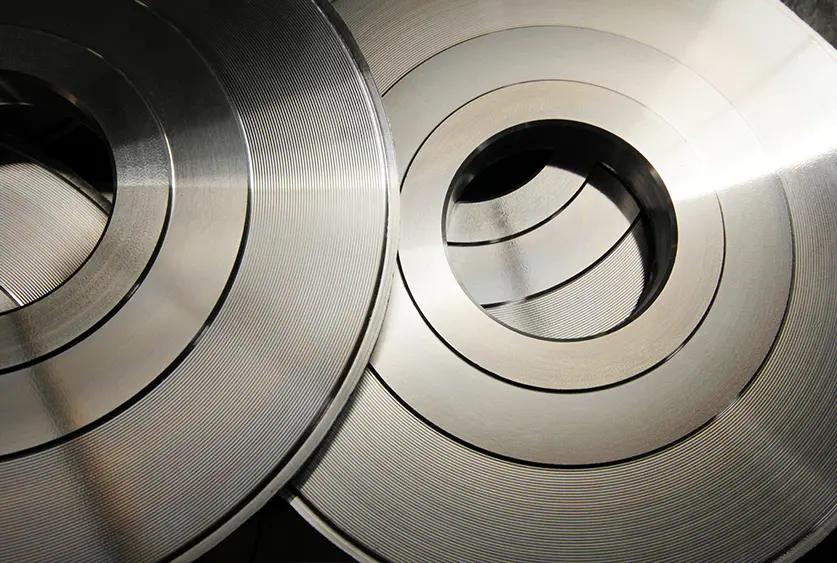
What Surface Conditions Commonly Appear on Heat Treated Steel Strip After Furnace Processing
Surface condition is often an important thing people notice after furnace processing, even before mechanical behavior is tested. Sometimes the surface looks clean and even. Other times, there may be a dull layer, a light patch, or a slightly uneven appearance along the length.
These changes do not always mean the product is damaged. In many cases, they are just signs of how the strip reacted to heat, atmosphere, and transfer conditions inside the line.
The surface can change for several reasons. If exposure is not fully even, the outer layer may react differently from one area to another. If the cooling stage is not balanced, some regions may show a different finish than others. If contact with rollers or surrounding equipment varies, the trace can become visible after the run.
For Heat Treated Steel Strip, common surface states may include:
- a darker surface after high exposure to heat
- a light oxide film after furnace passage
- uneven shine across the width
- small marks from transfer or contact points
- a slightly rougher feel in areas that cooled differently
These conditions matter because the surface is often linked to later handling and processing. A surface that looks acceptable may still behave differently during cleaning, cutting, or bending. That is why surface review is usually part of the normal process check, not just an afterthought.
The important thing is to read the surface as a process trace. It often tells a quiet story about how the strip moved through the furnace, where the heat was stronger, and where the cooling path changed a little.
How Heat Treated Steel Strip Behaves During Stamping and Forming Operations in Manufacturing
The forming stage is where earlier processing decisions begin to show themselves clearly. A strip that looked stable during heat treatment can still behave in a different way once stamping starts.
When Heat Treated Steel Strip enters stamping or forming work, the response depends on how the material was prepared. If the thermal path was even and stable, the material usually behaves in a more predictable way. If there were small differences in temperature distribution, cooling timing, or composition response, the forming stage can expose them.
A few patterns are commonly noticed:
- edges may act differently from the center
- some areas may bend with less delay, while others feel tighter
- springback may vary from batch to batch
- the strip may show different resistance during repeated forming steps
This does not mean the material cannot be used. It means the forming setup often needs to match the actual condition of the strip, not only the intended grade name. In manufacturing, that difference matters. A process that looks acceptable in one run can feel different in the next if the thermal history was not the same.
The forming stage is therefore not separate from heat treatment. It is the next part of the same chain. What happens earlier in the line often shows up here, sometimes quietly, sometimes clearly.


