


 English
 中文简体
中文简体In manufacturing and downstream processing, strip material is often judged by how steadily it behaves from one coil length to the next. Small shifts in thickness, shape, edge condition, and surface state can change how a part forms, fits, or performs after processing. Precision Steel Strip is often chosen for that reason: not because it is a generic metal product, but because its behavior can be held within a narrow working window when the process is managed with care.
That stability matters in applications where repeatability is more important than a single impressive result. A strip that stays consistent during rolling, slitting, storage, and forming helps reduce rework and keeps later steps more predictable. For buyers and engineers, the real question is usually not whether the material can be made, but how steadily it behaves under normal production conditions.
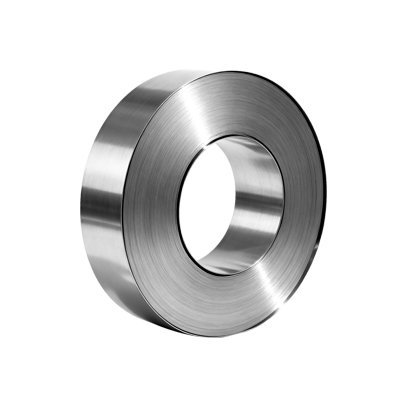
What factors control thickness tolerance stability in precision steel strip production
Thickness control begins long before the material reaches the final coil. It depends on how evenly force is distributed during rolling, how stable the feeding condition remains, and how carefully the process is held from start to finish. When the process drifts, the strip may still look acceptable at a glance, yet behave unevenly during later use.
Several elements usually shape that stability:
- Material feed consistency, which affects how the strip enters the rolling zone
- Force balance across the width, which influences local thinning or buildup
- Roll condition, which can change contact behavior over time
- Tension control, which helps the strip move steadily through each stage
- Temperature balance, which can alter response during processing
The goal is not only to produce a thin strip. It is to keep the thickness steady across the full length so the material performs in a predictable way after it leaves the mill. That is one reason Precision Steel Strip is often associated with applications where later forming steps leave little room for variation.
A useful way to think about thickness stability is to separate what can be seen from what must be measured. A surface may appear uniform while the internal thickness profile still varies. In practical terms, this means visual inspection alone is not enough when the strip is intended for demanding downstream use.
Which process parameters have a direct impact on flatness control in precision steel strip rolling
Flatness is closely tied to how the strip carries internal stress as it moves through the rolling line. If the material is pulled unevenly, compressed unevenly, or guided with poor alignment, shape distortion can appear even when the thickness seems acceptable. That is why flatness control is often treated as a process balance issue rather than a single-machine issue.
Influential parameters usually include force distribution, tension balance, guide alignment, and roll condition. When these elements work together, the strip exits the line with a more stable shape. When one part of the system shifts, the strip may show edge wave, center rise, or uneven lay after coiling.
| Process factor | Typical effect on flatness | Practical concern |
|---|---|---|
| Force distribution | Helps keep the strip shape even | Uneven loading can bend the strip profile |
| Tension balance | Supports steady travel through the line | Irregular pull can create shape distortion |
| Guide alignment | Keeps the strip centered | Off-center movement can affect edge behavior |
| Roll condition | Influences contact consistency | Wear can change shape control over time |
| Cooling balance | Affects shape set after processing | Uneven cooling may lock in distortion |
Flatness also affects how the material behaves later. A strip with shape instability may feed poorly into forming tools, sit unevenly in assembly, or create extra adjustment work for operators. For that reason, flatness is not just a visual quality point. It is a working condition that influences the next stage of production.
Precision Steel Strip is often specified where shape stability must be preserved through several handling steps. In such cases, flatness is not a secondary detail. It is part of the material's functional value.
How edge quality variations are formed and controlled during precision steel strip manufacturing
Edge quality is shaped by the way the strip is cut, trimmed, and handled after rolling. Even when the center portion of the material is stable, the edges can behave differently because they experience stress concentration, tool contact, and mechanical disturbance. Small irregularities at the edge may later become weak points during forming or assembly.
Edge variation can come from several sources:
- Cutting tool condition, which affects how cleanly the edge is separated
- Slitting alignment, which influences the regularity of the cut path
- Tension during handling, which may stretch or distort the edge
- Burr formation, which can leave a rough or raised edge line
- Coil handling, which may introduce side damage after processing
A useful control approach is to treat the edge as a sensitive zone rather than a leftover boundary. The edge often reacts more quickly than the center when the process becomes unstable. That means inspection should include the strip margins, not only the broad surface area.
In practical use, edge quality can influence feeding behavior, fit, and later bending response. A strip with uneven edges may not sit cleanly in a tool, and that can create variation from part to part. Precision Steel Strip is often expected to reduce that kind of uncertainty, but that only happens when the edge process is controlled with the same care given to thickness and flatness.
The following points are often useful when reviewing edge condition:
- Look for consistency along the full coil length
- Check whether damage appears after trimming or after transport
- Review whether edge irregularity repeats in the same zone
- Confirm that handling methods do not introduce fresh surface marks
Edge control is not separate from the rest of the process. It is part of the same quality chain, and a weak link there can affect the final result even if other aspects look stable.
How surface condition influences stamping accuracy and forming consistency in precision steel strip applications
Surface condition shapes how the material moves against tools, how friction behaves during forming, and how evenly the strip responds under pressure. A smooth and stable surface can support steadier forming behavior, while an uneven or disturbed surface may cause inconsistent feed, variation in part release, or visible marks on the finished component.
This matters because forming operations often depend on repeatable contact between the tool and the strip. If the surface has random roughness, contamination, or light scratches, the material may not behave the same way across the full production run. Small differences can show up as differences in part shape, edge condition, or tool wear.
Precision Steel Strip is often selected for forming work where surface control helps reduce uncertainty. That does not mean the surface must look polished in every case. It means the surface must match the intended use. Some applications need a cleaner finish for close-contact parts, while others require a controlled texture that supports grip or forming behavior.
Surface influence is often easier to understand when broken into three parts:
- Friction behavior, which affects how smoothly the strip moves through the tool
- Contact consistency, which affects how the material responds under pressure
- Surface integrity, which affects whether marks or defects transfer into the formed part
When surface condition shifts, stamping accuracy can shift with it. The result may not always be dramatic, but even small variation can matter in compact components or repeated assembly steps. That is why surface control is not only an appearance issue. It is part of the forming process itself.
How micro surface defects can influence reliability in precision steel strip based components
Tiny surface flaws may seem harmless at first, but they can become important when the strip is used in parts that move, flex, or carry contact load. A small scratch, pit, or raised mark may act as a local stress point during repeated use. Over time, that point can affect durability, contact behavior, or the way the component settles after forming.
The concern is not only visible damage. Some defects are subtle enough to pass casual inspection but still influence performance after processing. In components made from Precision Steel Strip, the surface often participates directly in function, so small imperfections can carry more weight than expected.
Reliability can be affected in several ways:
- A flaw may interrupt smooth tool contact during stamping
- A mark may alter how stress spreads across the part
- A rough spot may influence repeat movement or flexing
- A surface irregularity may change how parts fit together
Because of this, inspection should look beyond appearance alone. A surface that seems acceptable under normal light may still contain irregular zones that matter later. In practice, the question is less about whether a defect exists and more about whether that defect can influence the intended use.
For manufacturers and buyers, this is where process discipline becomes visible. Clean handling, stable transport, careful storage, and controlled forming all help reduce the chance that a minor surface issue turns into a functional one.
Why residual stress behavior matters for long term performance of precision steel strip materials
Residual stress is often hidden during early inspection, yet it can shape how the material behaves after cutting, forming, or coiling. A strip may look stable on the surface while still carrying internal imbalance that changes its response later. That is why residual stress is not treated as a side issue in manufacturing. It is part of the material condition itself.
When stress is distributed unevenly, the strip may move in ways that are difficult to predict. It can curve after processing, shift shape during storage, or respond differently when placed under load. For parts that depend on consistent fit and motion, that kind of hidden variation can create extra adjustment work.
A practical way to view the issue is to separate visible quality from stored behavior. Visible quality tells only part of the story. Internal condition often decides whether the material remains stable during later handling.
Residual stress can influence several outcomes:
- Shape retention after forming
- Dimensional stability during storage
- Response to repeated bending
- Consistency across long coil lengths
For buyers, the key point is that the material should remain usable not only when it leaves the line, but also after transport, waiting time, and secondary processing. That is where residual stress becomes a real performance factor.
What role annealing process plays in balancing strength and flexibility of precision steel strip
Heat treatment changes how the strip behaves at a structural level. It can reduce internal strain, adjust hardness, and improve the way the material responds during forming. The goal is not to make the strip soft or hard in isolation. The goal is to reach a condition that matches the intended use.
If the material stays too stiff, it may resist forming or crack under tight bending. If it becomes too relaxed, it may lose the body needed for stable parts. Annealing helps narrow that gap by creating a more workable balance between strength and flexibility.
The effect can be viewed in three linked areas:
- Internal structure, which influences how the strip carries load
- Forming response, which affects how easily the strip changes shape
- Shape recovery, which affects how the strip behaves after bending
| Annealing outcome | Practical effect | Production concern |
|---|---|---|
| Stress reduction | Helps reduce internal imbalance | Too little change may leave the strip unstable |
| Structure adjustment | Supports a more even response | Uneven treatment can create inconsistent zones |
| Flexibility gain | Improves forming behavior | Excessive softening may weaken support |
| Shape stability | Helps the strip stay usable after processing | Insufficient control may result in later distortion |
In practice, annealing is often about matching material state to the next step. A strip intended for repeated forming needs a different balance than one used for rigid support. That is why heat treatment is not an isolated stage. It connects directly to later performance.
How precision steel strip supports performance stability in miniaturized mechanical and electrical components
Compact components place pressure on the material in a different way. Small parts leave little room for variation, so the strip used to make them must behave consistently across many repeated operations. A slight change in surface, thickness, or shape may be enough to affect fit, movement, or contact behavior.
This is one reason strip material is used in compact assemblies where space is limited and repeatability matters. The role of the strip is not only to provide raw material. It also helps carry the dimensional and mechanical behavior needed by the final part.
Performance stability in small components often depends on:
- Consistent feed through fine tooling
- Stable shape during repeated forming
- Reliable contact behavior after assembly
- Low variation from one part to the next
In mechanical parts, the strip may need to hold spring action, maintain shape, or resist unwanted deformation. In electrical parts, it may need to support contact alignment and steady connection behavior. The demands are different, but the underlying requirement is similar: the material must act in a predictable way.
Precision Steel Strip is often valued here because it can support that repeatable behavior when processing is controlled well. In compact products, the strip becomes part of the function, not just the input. That is why even small shifts in quality can matter more than they would in larger components.


